Guanacaste, Costa Rica
Playa Avellanas Residential Development
Project Team: Wyota Workshop (WW), Consultores Urbanos (CU), Studio Anomino (SA), Proyecto de Paisaje y Arquitectura Regional (PPAR); 2022
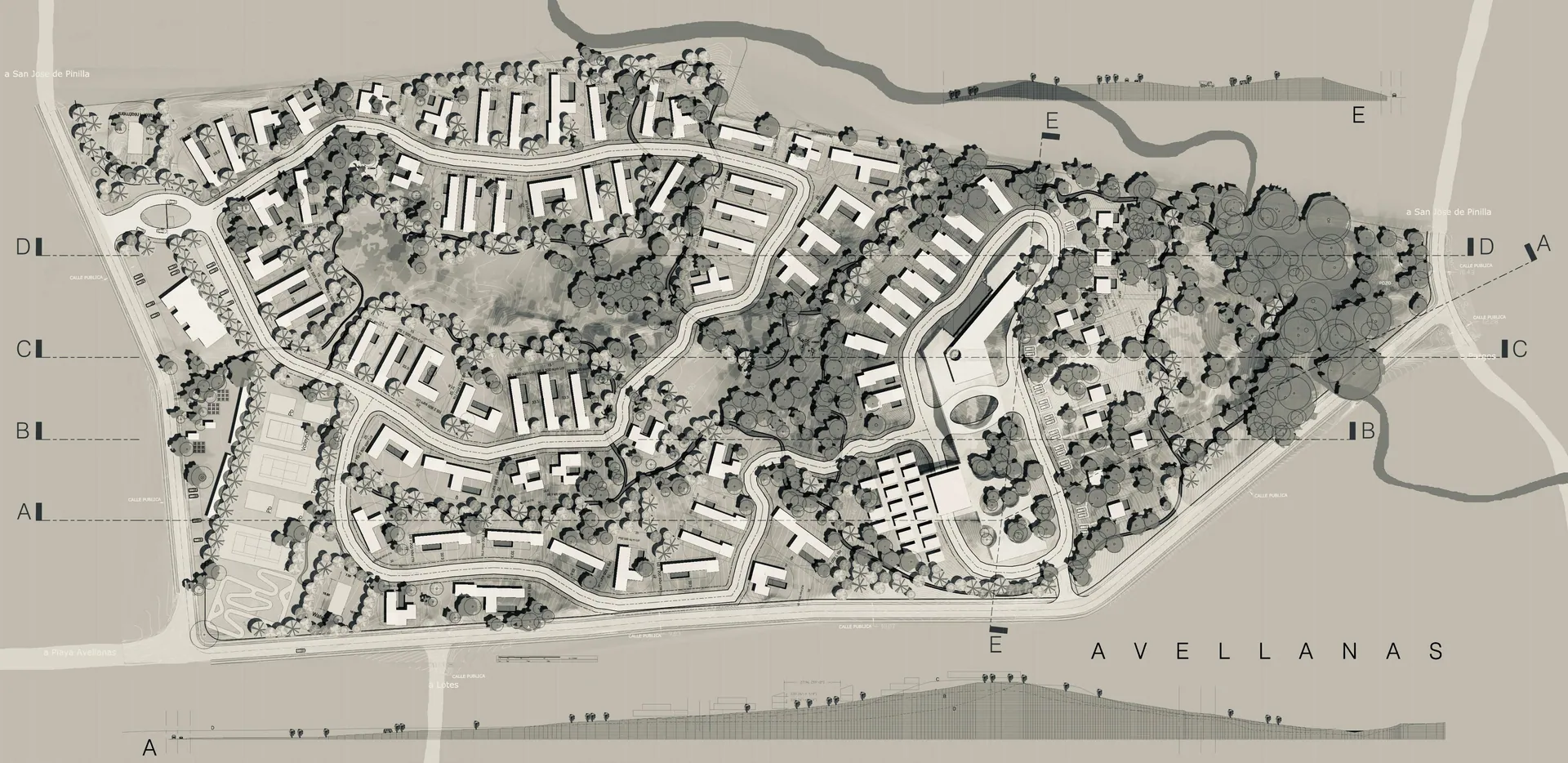
Playa Avellanas is located in the Guanacaste province of Costa Rica, a region experiencing increased development due to its natural beauty and desirable location. This project revisits a gated single-family development initially planned with minimal consideration for the site's unique habitats and forests. The original 33-acre plan posed significant environmental challenges, but upon inheriting the project, we took a different approach.
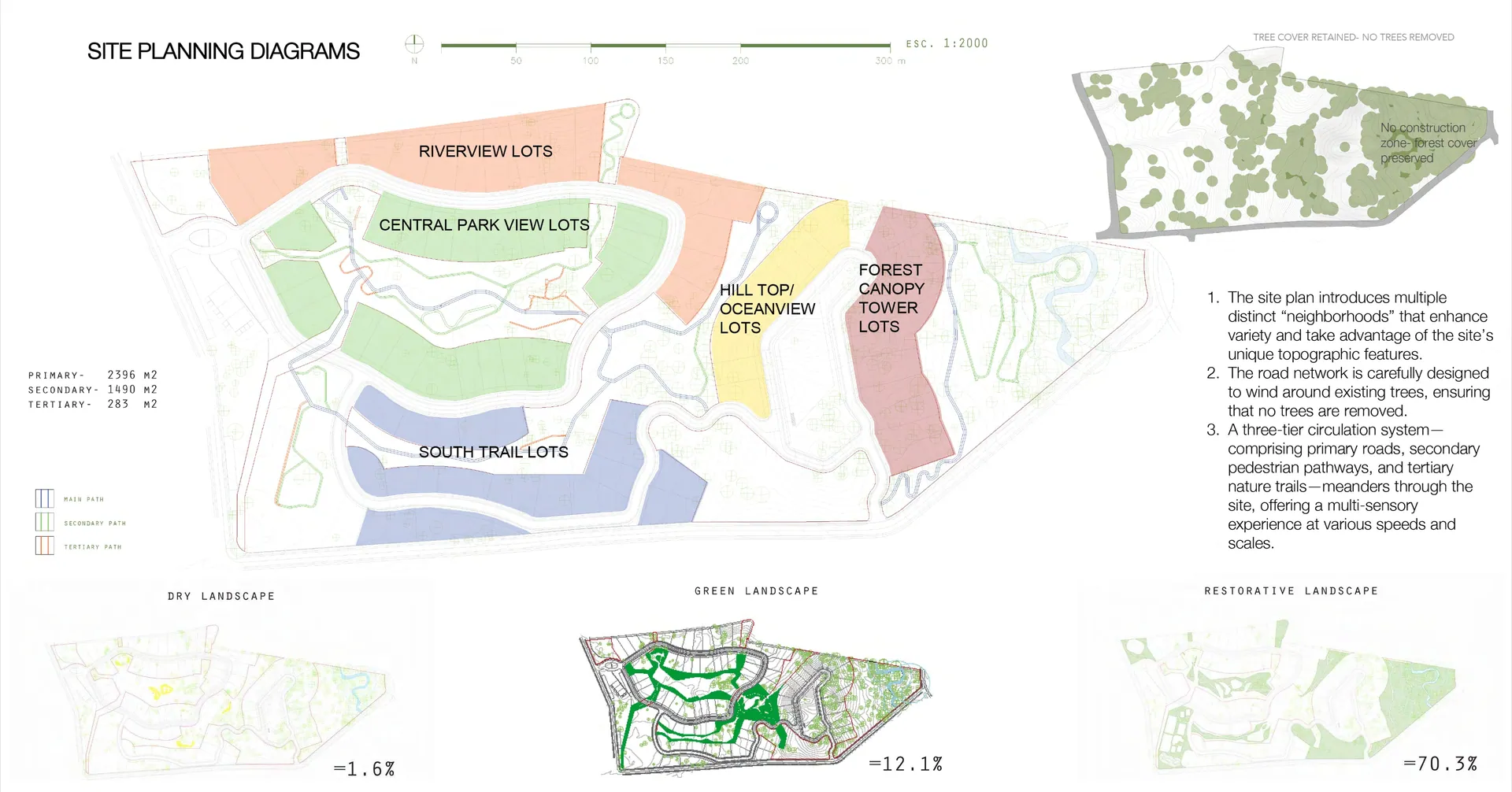
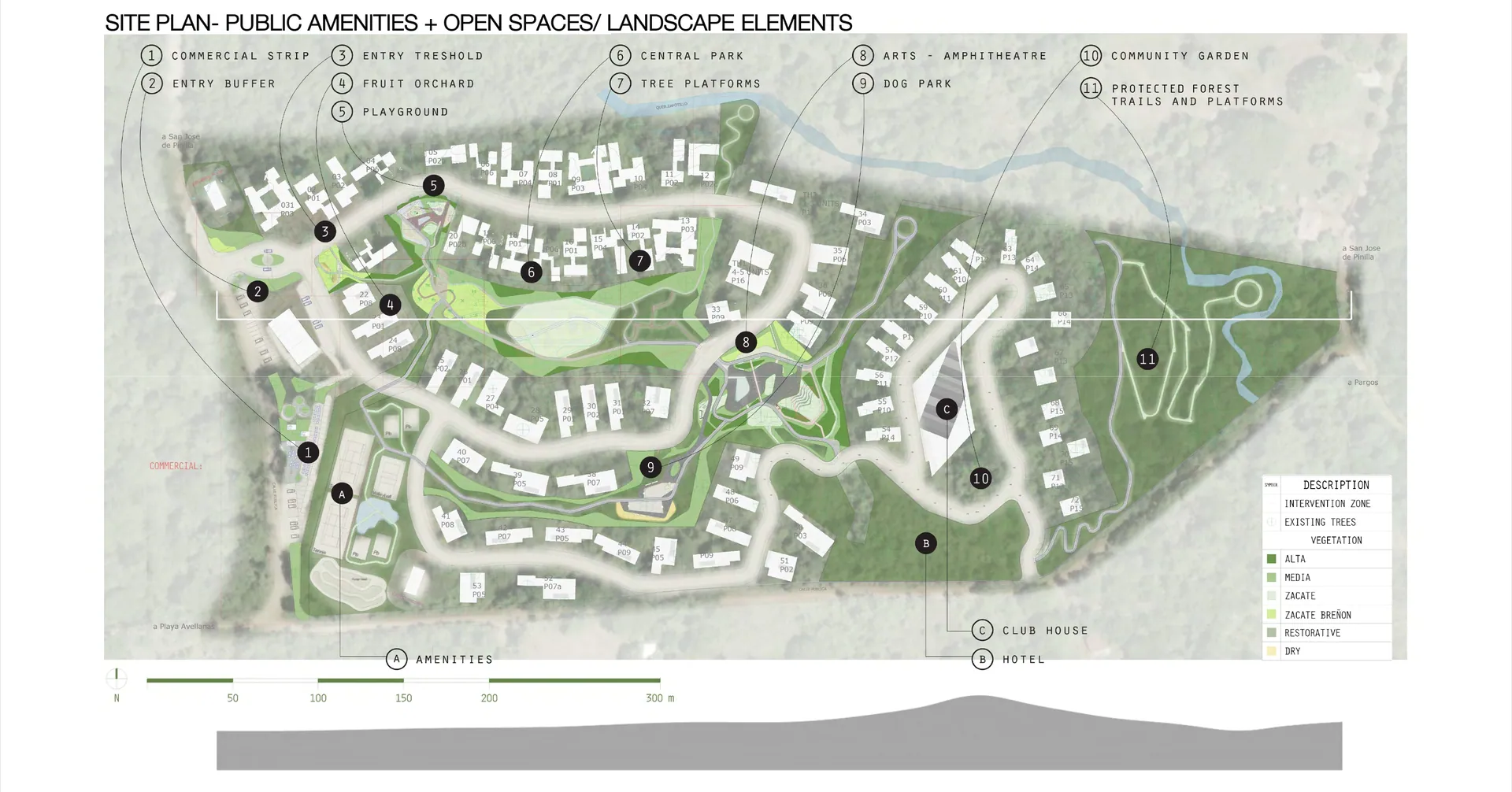
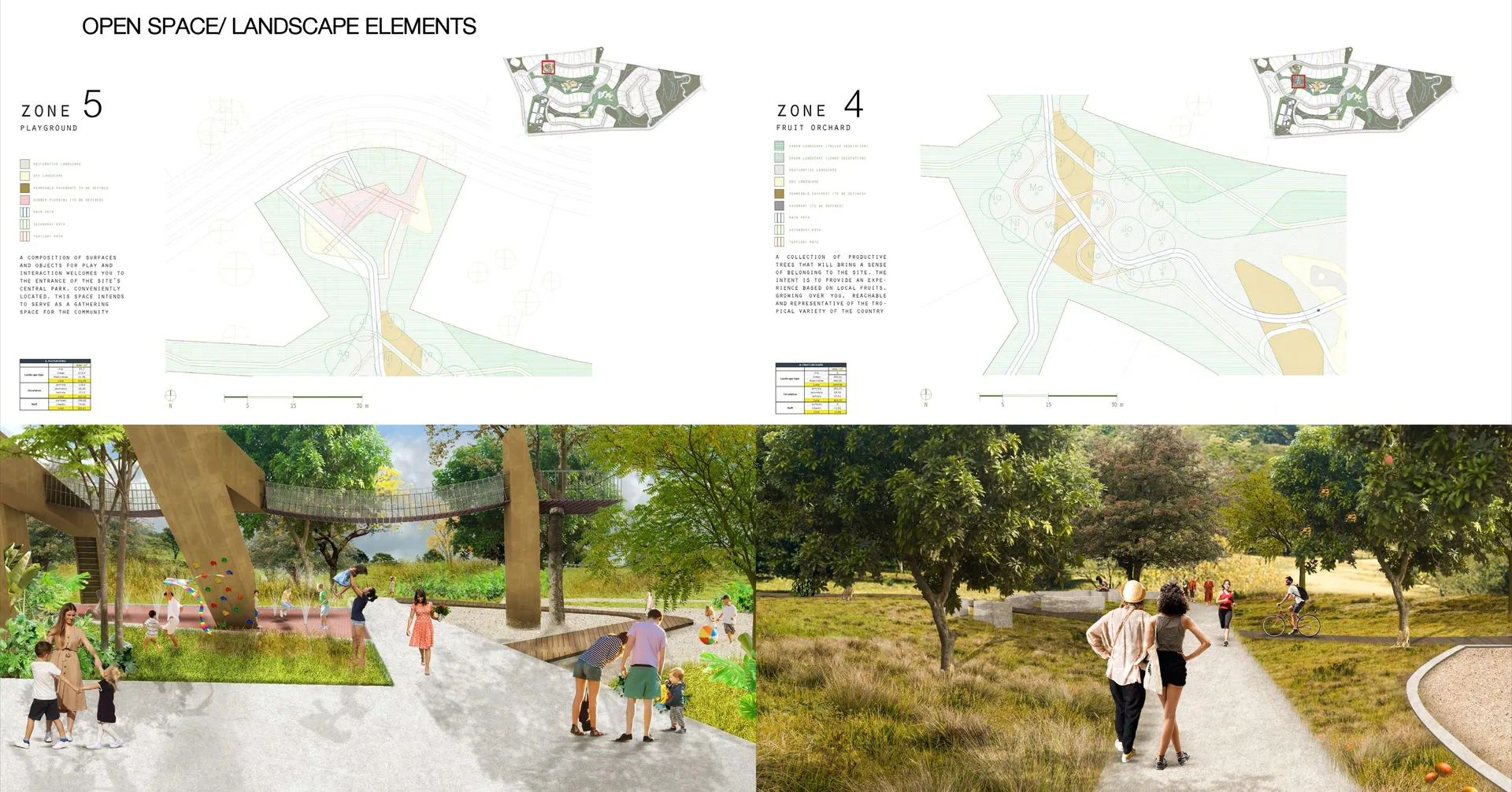
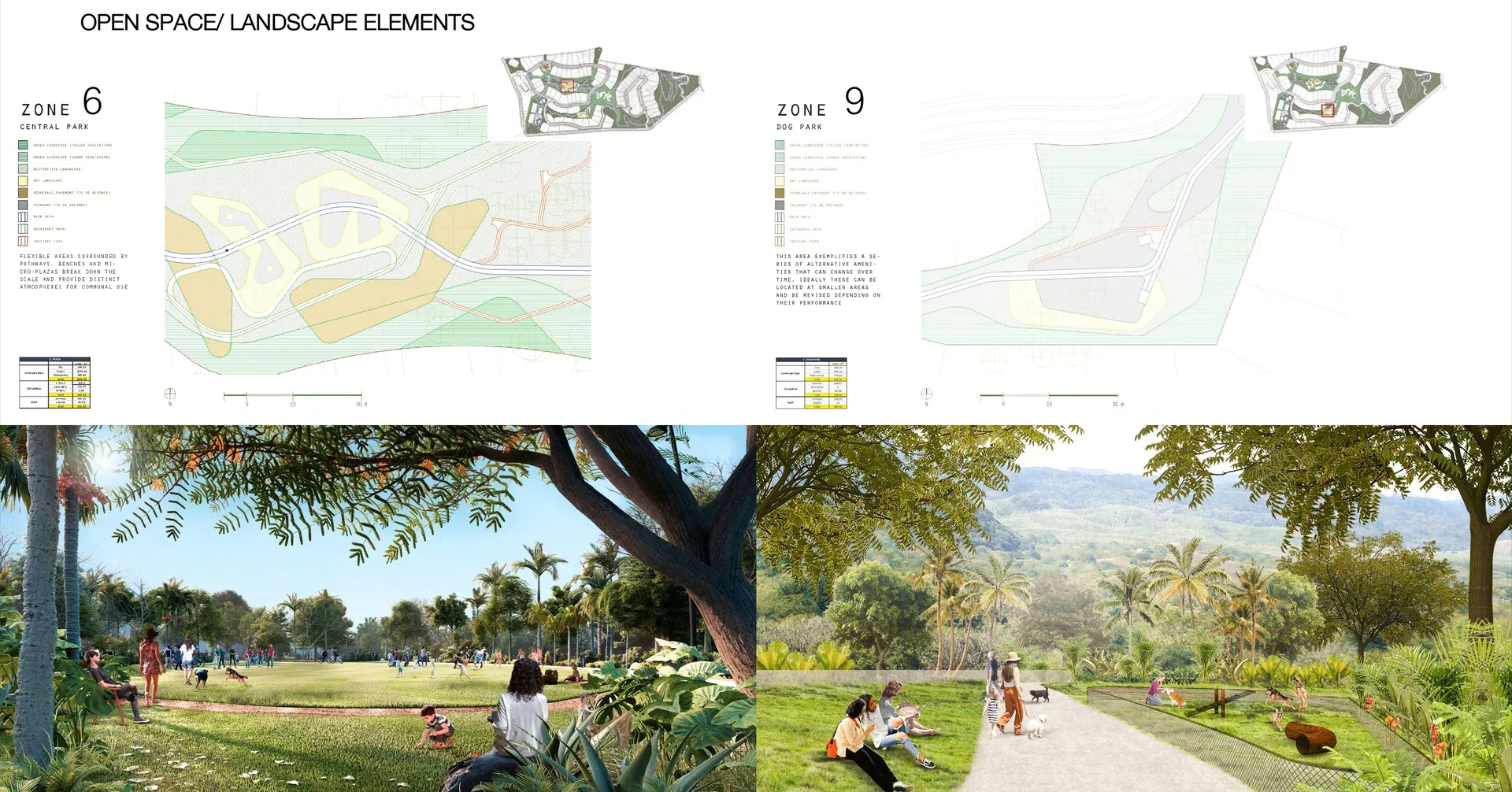
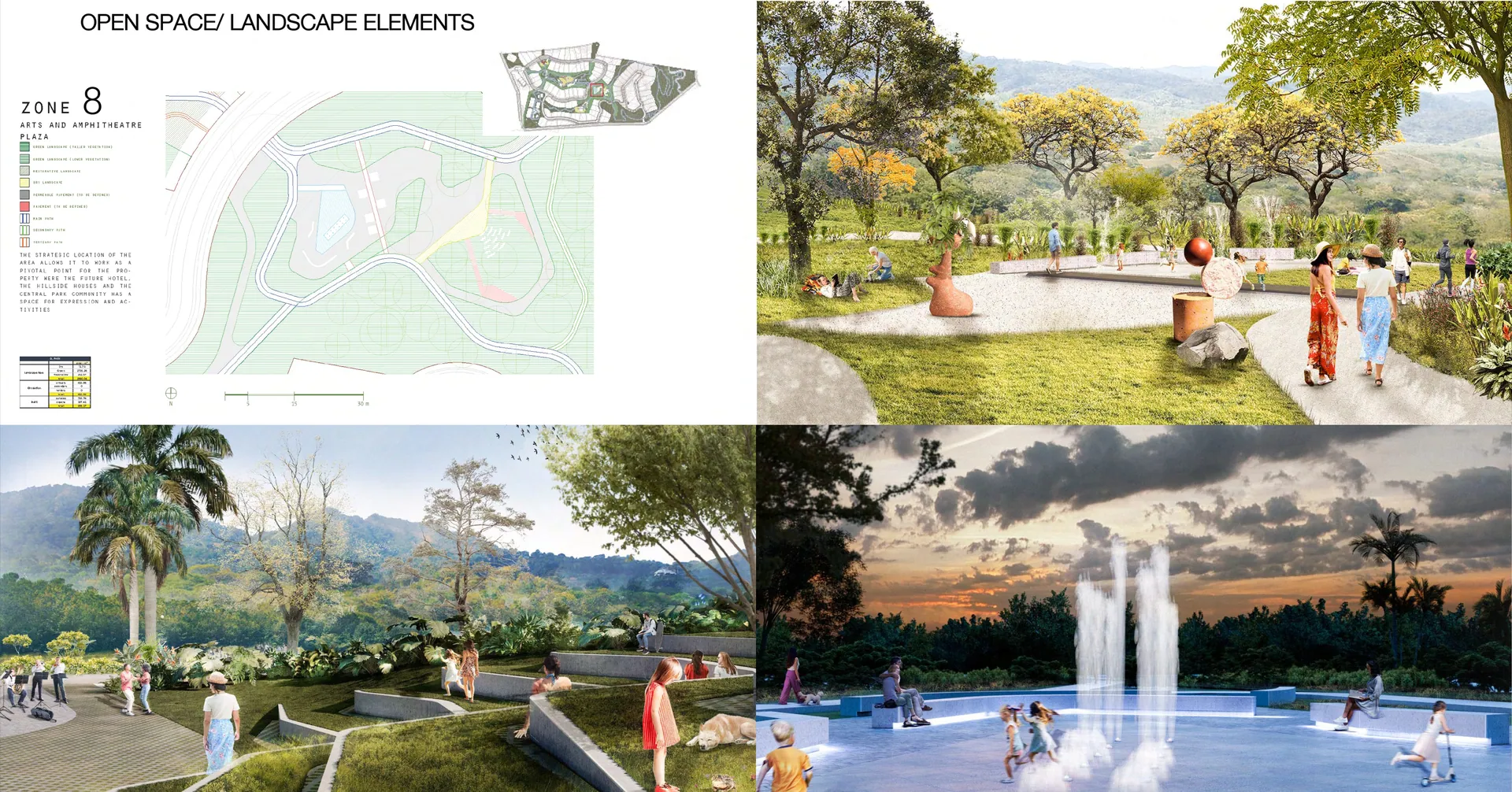
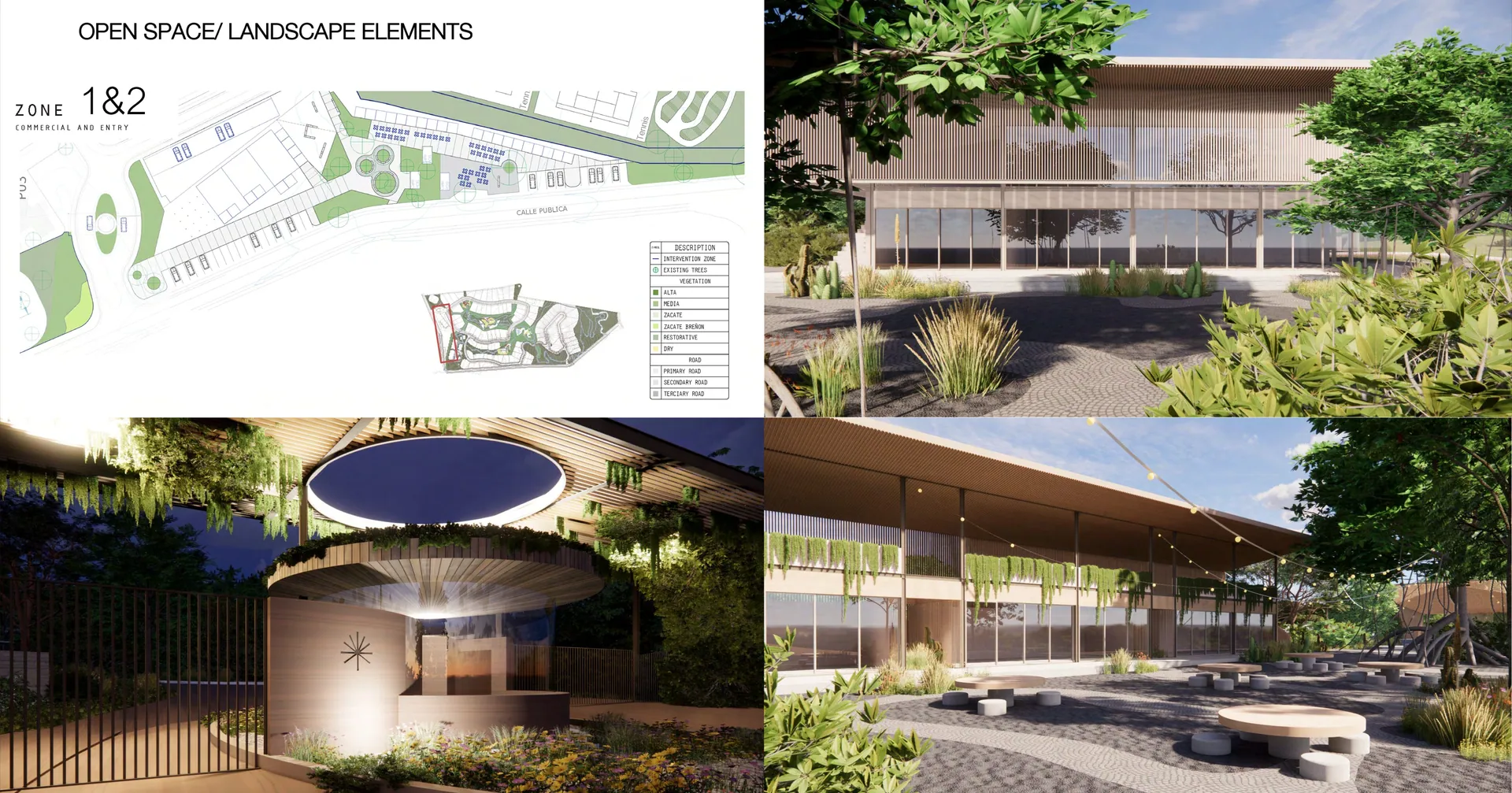
Our goal was to create a development that respects Costa Rica's climate, preserves the site's natural beauty, and supports the local community of Avellanas. By reducing the number of lots and incorporating diverse programmatic elements, we transformed the project into a more sustainable and inclusive endeavor. The updated design includes a market, open community spaces, an eco-hotel, and onsite housing for staff.
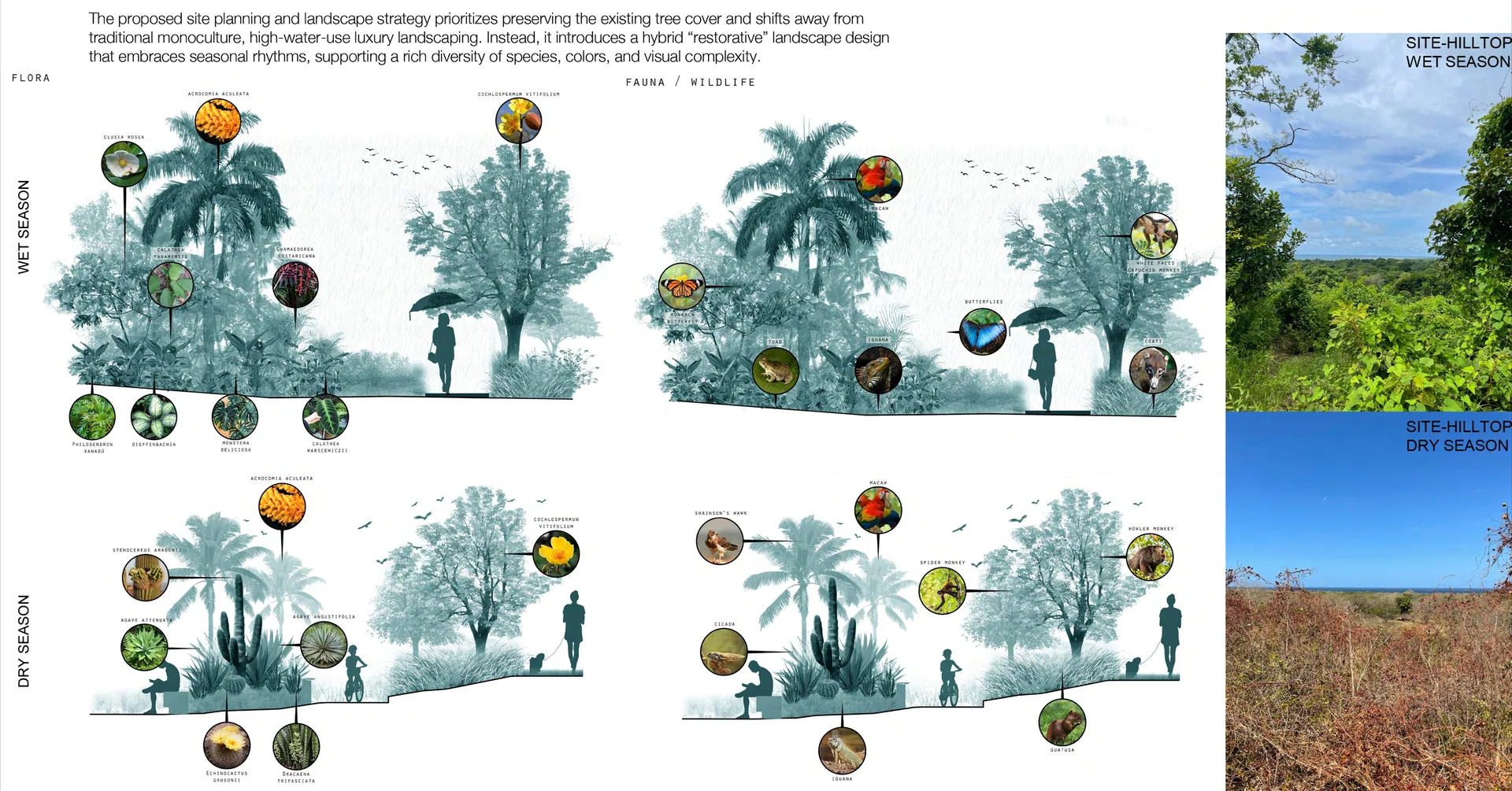
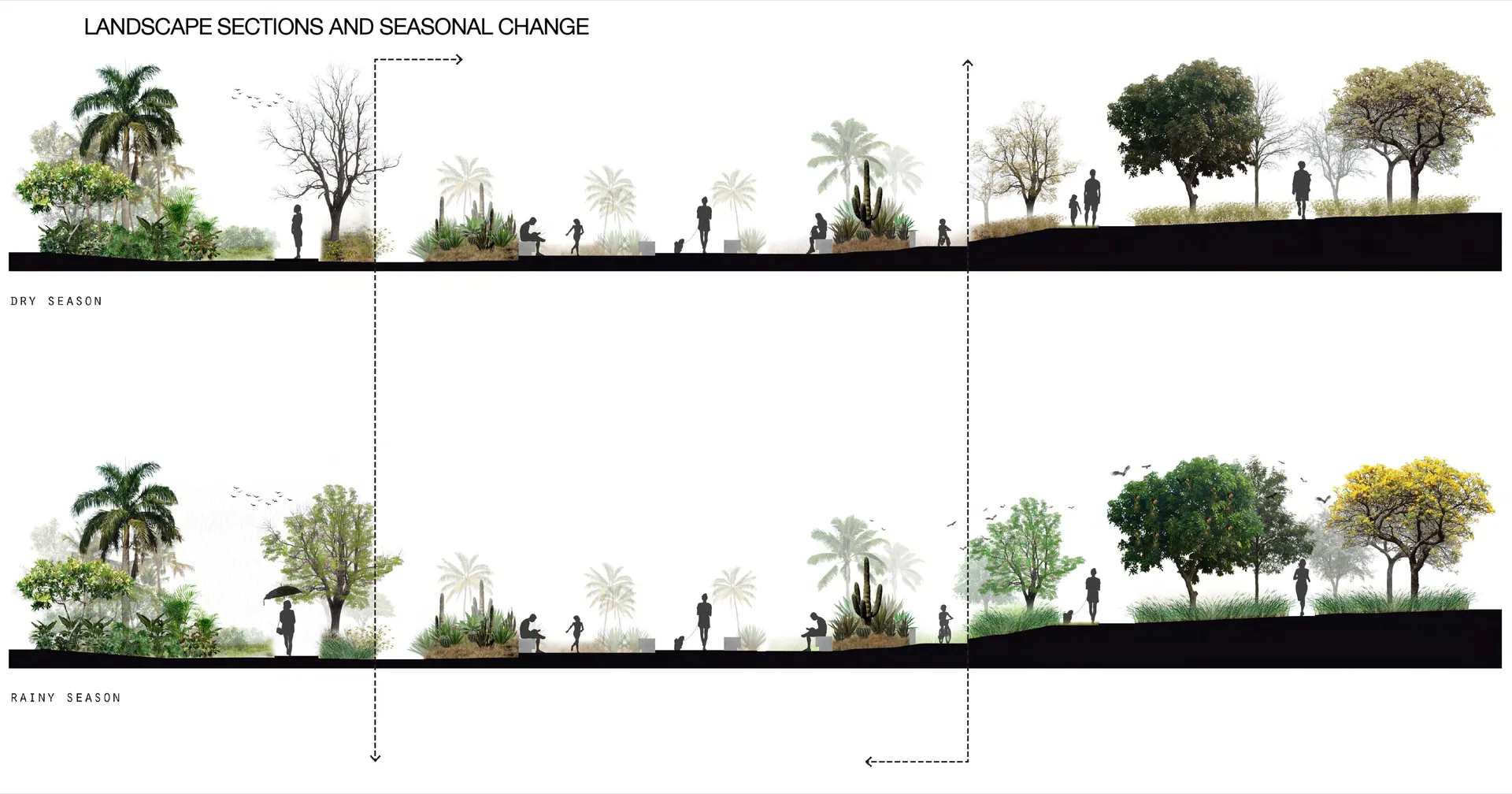
The proposed site planning and landscape strategy prioritizes preserving the existing tree cover and shifts away from traditional monoculture, high-water-use luxury landscaping. Instead, it adopts a hybrid restorative approach, designed to support a seasonal rhythm that accommodates a diverse range of species, along with greater color and visual variety.
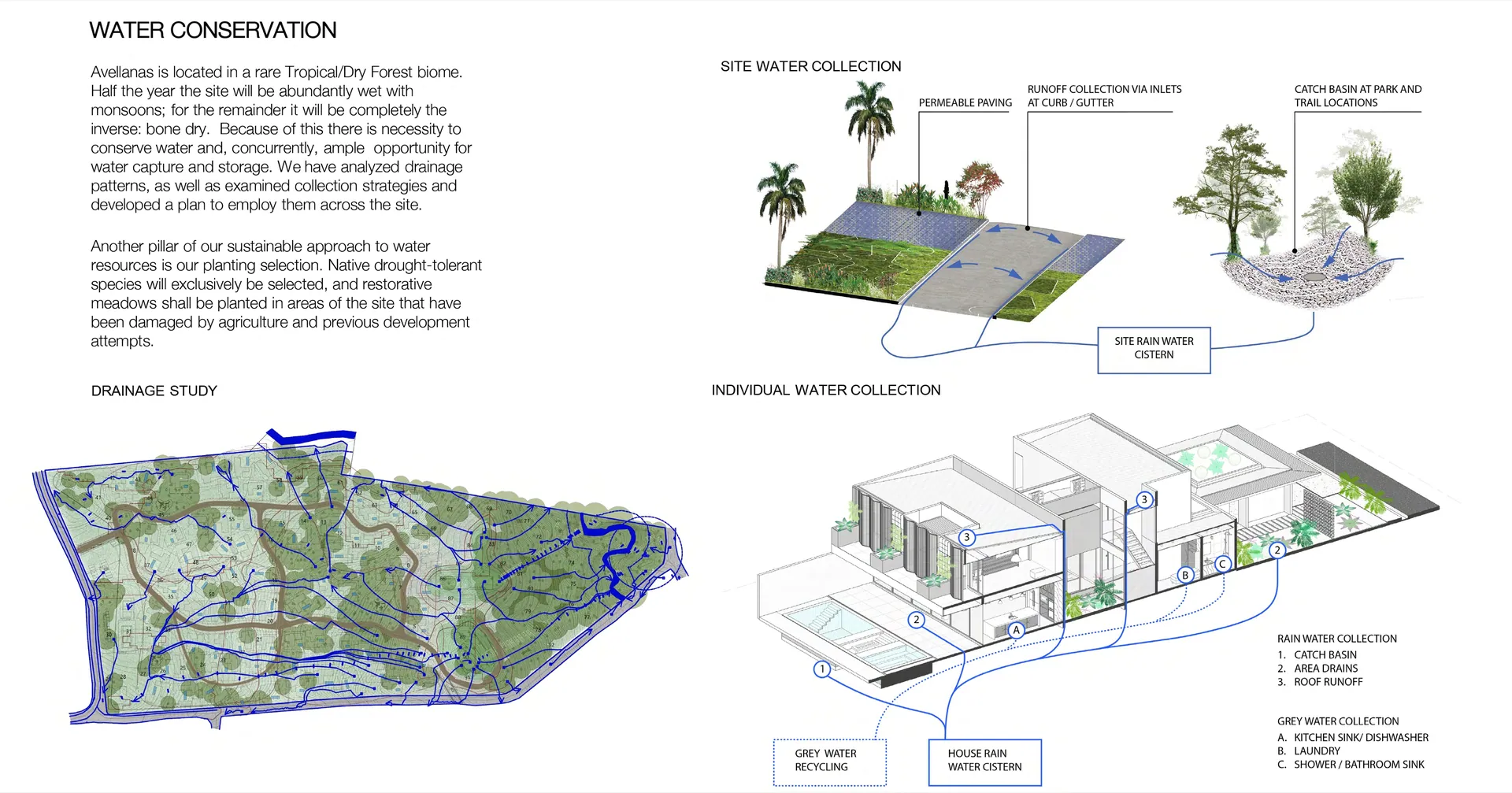
Avellanas is situated in a unique tropical dry forest biome, characterized by distinct seasonal extremes: a wet monsoon season followed by a prolonged dry period. This duality highlights the importance of conserving water while also providing opportunities for efficient water capture and storage.
We have studied the site's drainage patterns and developed strategies for water collection and implementation across the site. Another key aspect of our sustainable water resource approach is the careful selection of plantings. Only native, drought-tolerant species will be used, and restorative meadows will be introduced in areas degraded by agriculture and previous development efforts.